
Yojna
Kusum yojna
solar water pump
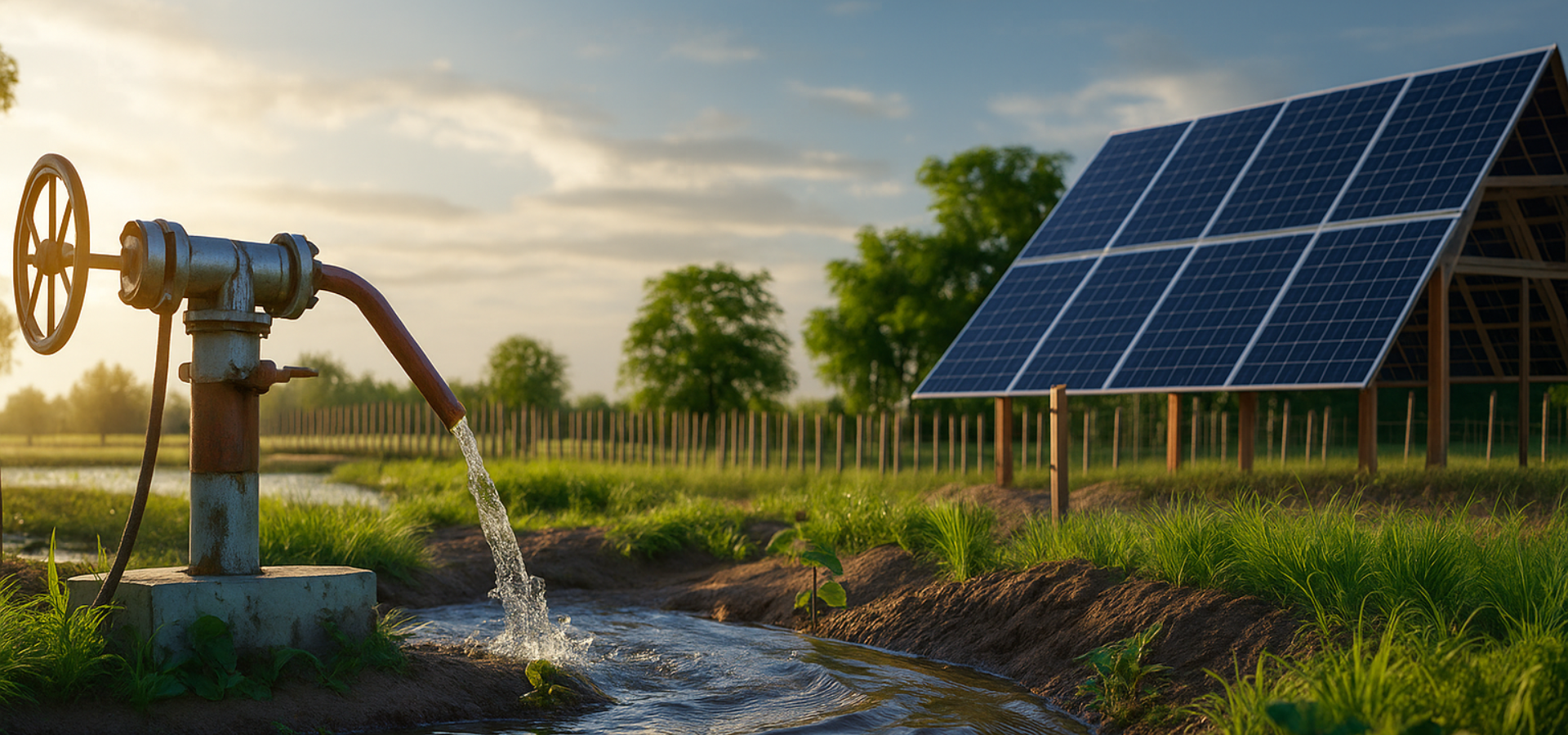
The PM-KUSUM (Pradhan Mantri Kisan Urja Suraksha evam Utthaan Mahabhiyan) scheme is a government initiative aimed at empowering farmers through solar energy. One of its key components is the installation of solar-powered water pumps, which enables farmers to irrigate their fields using clean and free solar electricity. This not only reduces dependency on costly diesel or grid electricity but also ensures a reliable water supply in remote or off-grid areas.
Under the scheme, farmers can receive up to 60% subsidy from the central and state governments, and an additional 30% loan assistance, making the upfront cost extremely low. Both standalone and grid-connected solar pumps are available, depending on the region and power infrastructure. The KUSUM Yojana is a game-changer in promoting sustainable agriculture, reducing fuel costs, and improving energy security for India’s rural backbone.
Key Components of Solar Water Pumps
- 01
Solar Panels
Function: Capture sunlight and convert it into electrical energy.
Types: Monocrystalline, polycrystalline, or thin-film panels.
Key Feature: Efficiency depends on sunlight intensity and panel orientation.
- 02
Pump Controller
Function: Regulates power from the solar panels to the pump motor, ensuring optimal performance.
Additional Features: Includes protection mechanisms against overvoltage, undervoltage, and dry running.
- 03
Water Pump
Types:
- Submersible Pumps: Used for deep wells or boreholes.
- Surface Pumps: Ideal for shallow water sources like rivers or ponds.
Function: Draws and transports water to the required location.
- 04
Solar Batteries (Optional)
Function: Store energy for use during low sunlight or nighttime operations.
Optional Usage: Not always included in direct solar water pump systems.
- 05
Piping and Storage Tanks
- Function: Facilitate water transport and storage for consistent supply.
- 06
Mounting Structures
Function: Support and orient solar panels for maximum sunlight exposure.
Design: Built to withstand wind, rain, and other environmental factors.
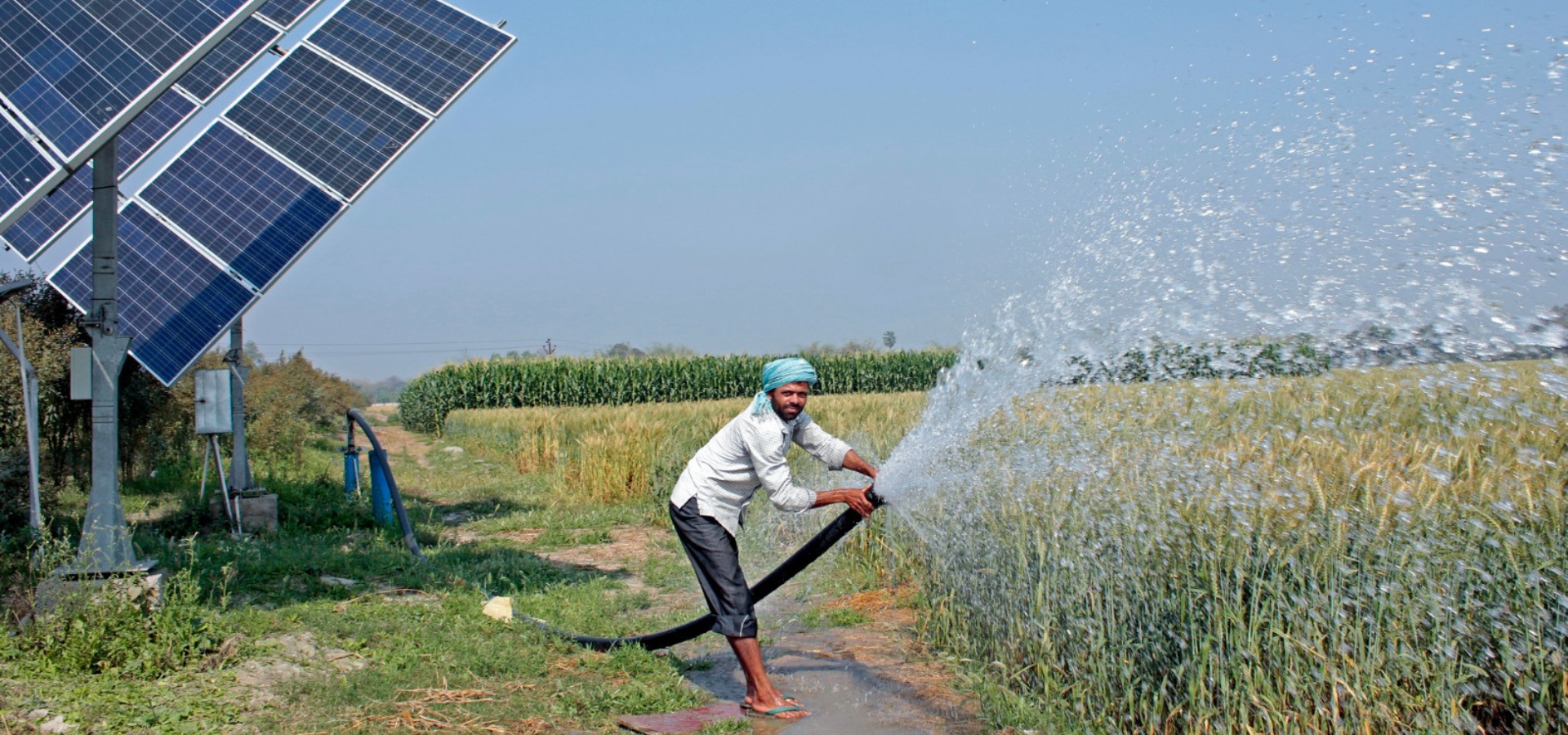
Working Principles of Solar Water Pumps
- 01
Solar Energy Capture
Solar panels absorb sunlight and convert it into direct current (DC) electricity.
The efficiency of energy capture depends on panel quality, sunlight intensity, and installation angle.
- 02
Energy Conversion and Control
The pump controller manages the energy flow, converting DC to alternating current (AC) if needed.
It ensures stable voltage and protects the system from power fluctuations.
- 03
Water Pump Operation
The controller powers the pump motor, enabling it to draw water from the source.
The pump type (submersible or surface) determines how water is extracted.
- 04
Water Distribution
The pumped water flows through pipes to the designated location, such as irrigation systems, storage tanks, or household taps.
- 05
Optional Battery Storage
If equipped with batteries, excess solar energy is stored for later use during cloudy weather or at night.
Advantages of Solar Water Pumps
- Eco-Friendly: Use renewable solar energy, reducing dependence on fossil fuels.
- Cost-Effective: Minimized operational costs compared to diesel or electric pumps.
- Low Maintenance: Fewer mechanical parts result in reduced wear and tear.
- Off-Grid Capability: Ideal for remote areas with limited access to electricity.
solar atta chakki yojana 2025
solar atta chakki
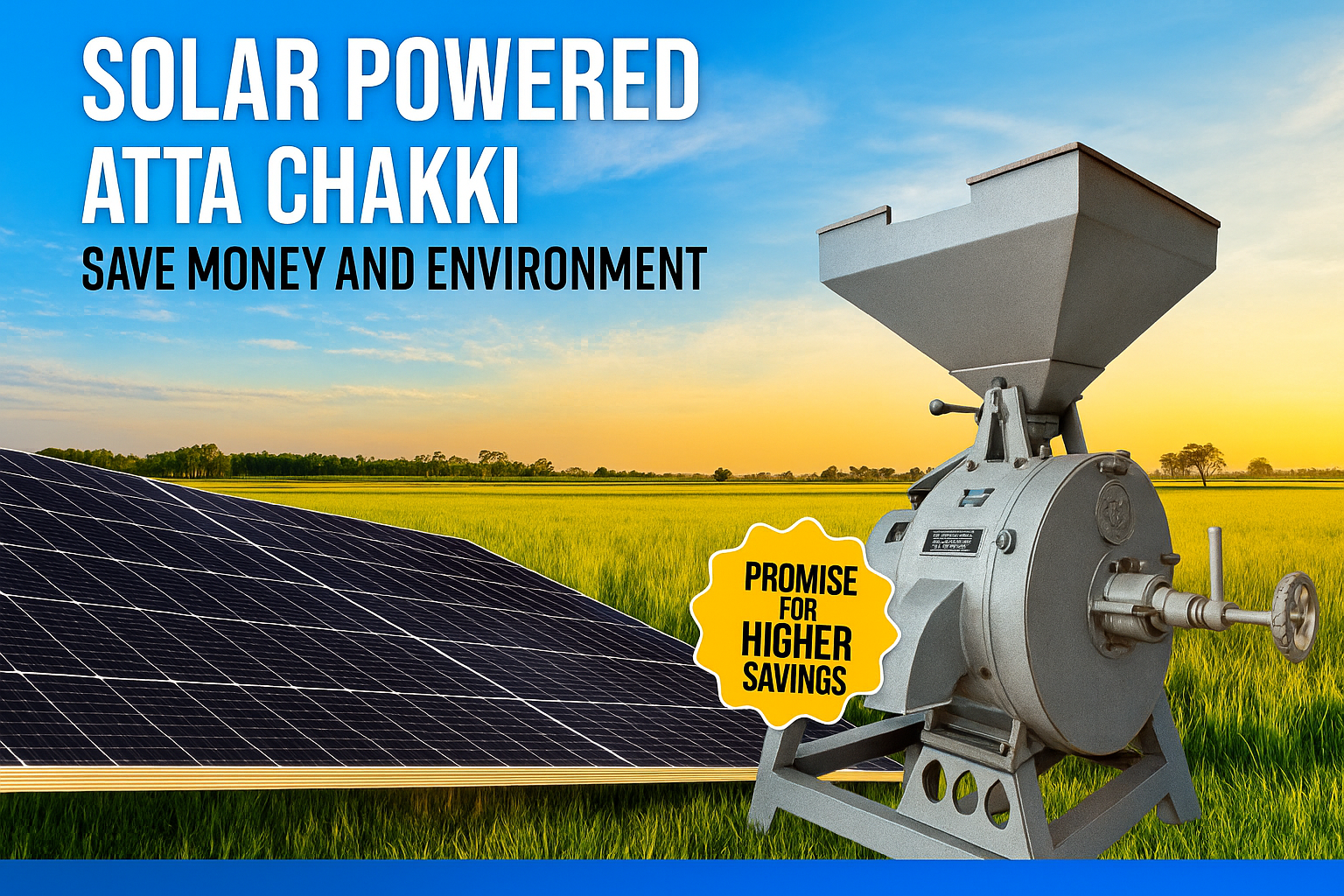
Several state governments in India are promoting the Free Solar Atta Chakki Yojana (Solar Flour Mill Scheme) for 2025.
This scheme primarily targets economically disadvantaged women in both rural and urban areas, including widows, providing them with a free solar-powered flour mill.
Here’s a summary of the scheme’s objectives, benefits, eligibility criteria, and application process:
- 01
Objectives
- Empowering women and creating employment opportunities.
- Addressing the problem of flour milling in remote areas and reducing dependence on traditional power sources.
- Promoting self-reliance among women.
- 02
Benefits
- Access to free solar-powered flour mills, eliminating the need for electricity or diesel.
- Savings on electricity bills and flour grinding costs.
Opportunity to start a small business and earn income. - Reduced noise and air pollution compared to traditional mills.
- Contribution to a cleaner environment by reducing carbon emissions.
- 04
Eligibility criteria
- The applicant must be a resident of the state where the scheme is implemented.
- The applicant’s family should be economically weaker or belong to the BPL (Below Poverty Line) category.
- The applicant’s family should not have any regular income source or a government employee.
- The applicant should be between 18 and 60 years of age.
- Preference is given to single women, widows, disabled women, and those without a stable income source.
- 05
Application process
- Offline application: Contact your local Gram Panchayat or relevant government office to obtain and submit the application form along with the necessary documents.
- Online application: Some states might offer online application portals.